

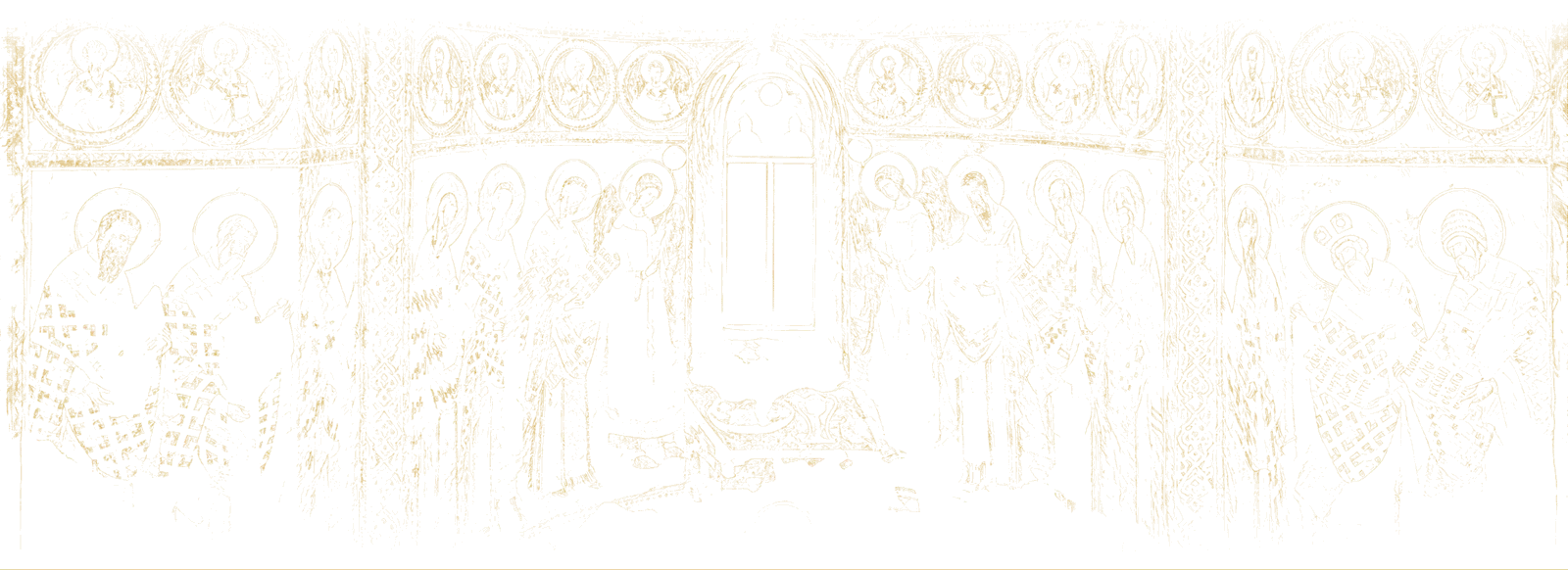
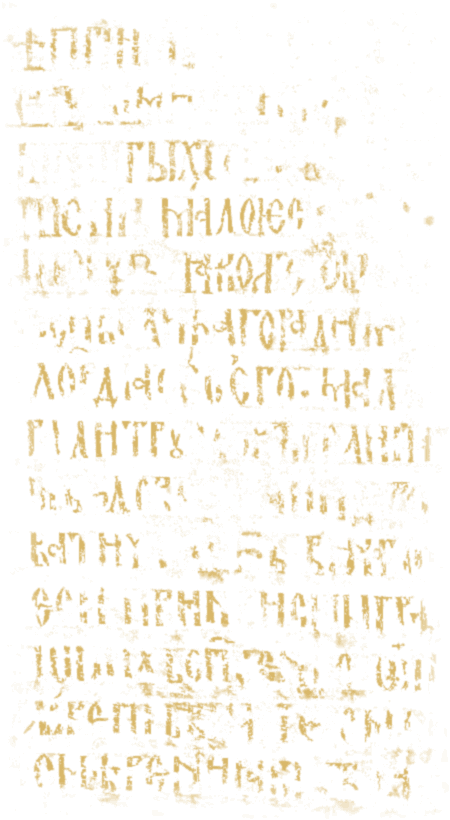
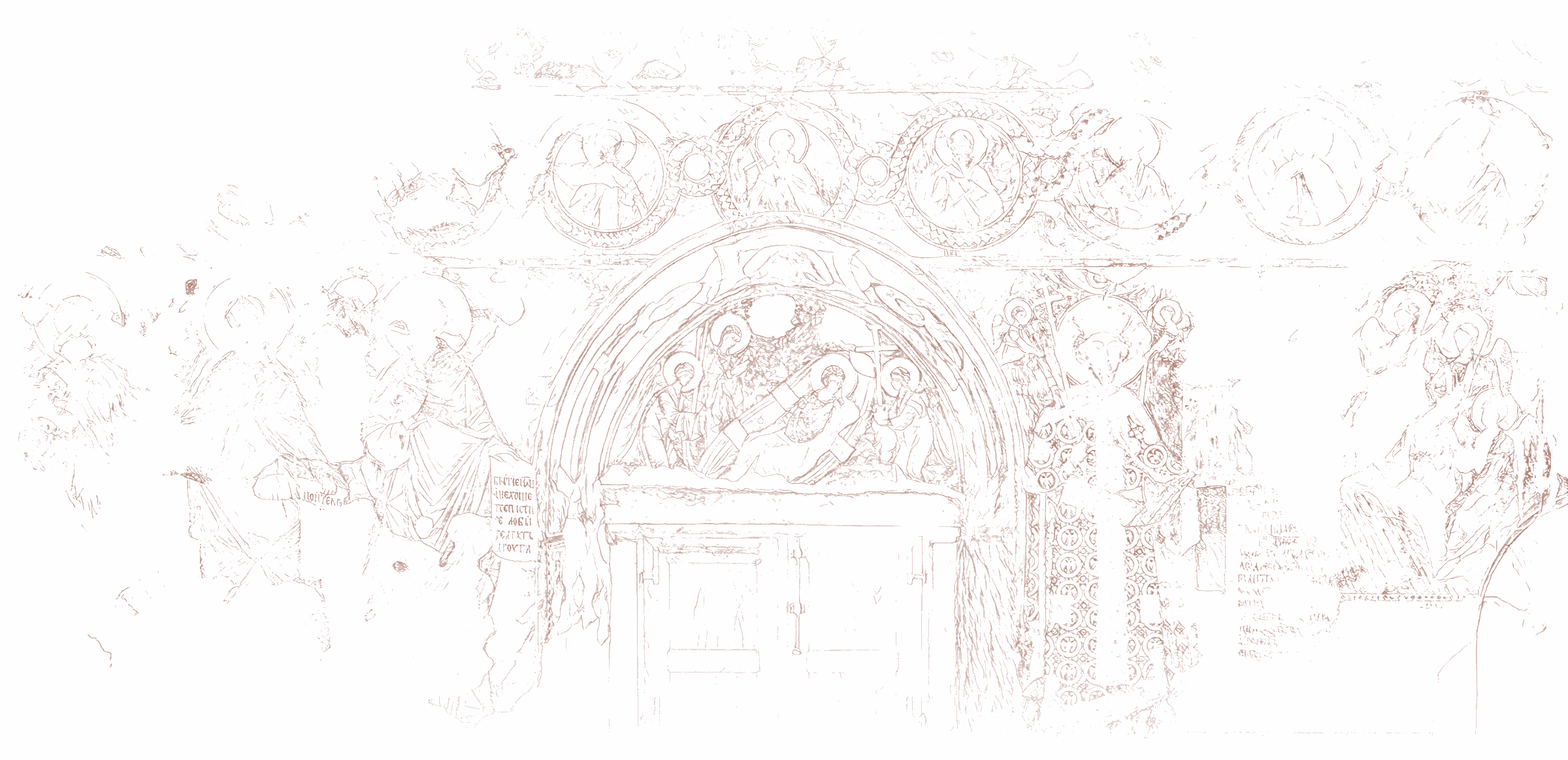
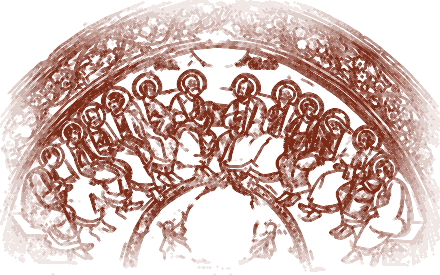


But Manasija Monastery itself, in Resava, was at that very time going through a difficult period and enduring suffering. In the Turkish census of 1741 the fortress of Resava is mentioned as abandoned and uninhabited.43 However, in the years or decades that followed, the Ottomans again settled in the endowment of Saint Despot Stefan. The Resava fortress again became a Turkish settlement, and the beautiful church of Manasija was apparently once more used as an auxiliary building. But what exactly the fate of the monastery itself was in that period is not known to us. Information about events in Manasija Monastery from 1739 to the end of the 18th century is scant. Several graffiti carved into the frescoes of the monastery church during the second half of the 18th century are neither a clear nor a concrete testimony to conditions in Manasija at that time. What we may assume is that Manasija shared the fate of the people, who suffered under Ottoman rule. The surviving historical testimonies also lead us to such an assumption. According to the field notes written down by the Austrian spy, cartographer and ensign of the Austrian army Franz Xaver Pokorny (1753/1757–1832) while carrying out his espionage mission in 1784, Manasija is a fortification on the Resava, a former monastery seized by the Turks and at that moment the residence of a certain Mehmet Baša [OIS 54: 56]. In his diary Pokorny relates how on September 26, 1784, Mehmet Baša of Manasija joined him and the monk Pajsije on the journey to Kladovo and Sip, from which they returned together on October 22 of the same year; they ended their journey in the fortress of Manasija, where their traveling companion Baša, as the lord of the fortress ("Herr des Schlosses"), entertained them at dinner [PO 119]. According to Pokorny's notes, the church standing in the middle of the fortification is still in fairly good condition, but the Turks had damaged and desecrated the wall paintings and frescoes in the church [OIS 54: 56]. Some secondary testimonies about Manasija Monastery in this period have also survived, of a travel-writing and oral character, and indirectly, in authors from the middle of the 19th century. Notable among them are the notes on Manasija left by Archimandrite Evgenije Simeonović (1815–1880), later Bishop of Negotin, and by Josif Veselić (1823–1873); Simeonović says that he gathered these notes in conversation with older local people, eyewitnesses of the Ottoman administration of Manasija, that is, in conversation with the old man Rajko and the old woman Nasta from the village of Bukovac, which lies next to the monastery. These notes were written down sometime around 1860 and published soon afterwards.44 According to these oral testimonies, in the second half of the 18th century a Turkish dizdar lived in the Resava fortress with Turks and Turkish women; the Turks "defiled the monastery,"45 keeping horses and other livestock in the church and using the church as a stable; around the fortress there were Turkish inns (hans), and a mosque had also been built there, which was destroyed by lightning; below the monastery, on the Resava River, there was a Turkish bath.46 Some four years before Koča's Frontier (Kočina krajina), that is, sometime around 1784, the Turks, according to the eyewitness testimonies recorded by Simeonović and Veselić, abandoned the Resava fortress of their own accord, without any pressure or force, and moved away. Although these testimonies may be entirely authentic, we must nevertheless take them with reserve, given their oral nature and the period of more than half a century that elapsed before they were written down. Be that as it may, although Manasija was losing both its military and economic importance for the Turks, suffering did not pass it by. The Austro-Turkish War that broke out in 1787 engulfed the Serbian lands as well and turned them into a battlefield, and Turkish vengeance soon turned the fortress of Manasija Monastery into the scene of a cruel crime.
- According to one of the last recorded Ottoman defters, from 1741: cf. Miroslav Pavlović, "The Military and Administrative Organization of the Sanjak of Smederevo, 1739–1788" („Војно административно уређење Смедеревског санџака 1739–1788.") (doctoral dissertation, University of Novi Sad, Faculty of Philosophy, Department of History, 2016), 111.
- Cf. S. A. [= Evgenije Simeonović], "Description of Manasija Monastery," 51–59; I. E. [= Evgenije Simeonović], Description of Manasija Monastery (Описъ монастыра Манасiе); Iosif Veselić, Description of Monasteries in Serbia. Part 1. By Iosif Veselić, Professor (Описъ монастира у Србіи. Часть 1) (Belgrade: Knjigopečatnja A. Andrića, 1867), 54–65. According to a note in I. E. [= Evgenije Simeonović], Description of Manasija Monastery, 2, the report on Manasija was first published by Veselić in the newspaper Svetovid during 1861; that publication, however, was not available to us for this research. S. A. is a pseudonym of Evgenije Simeonović and may stand for "Simeonović Archimandrite" - cf. Gordana Jovanović, "The Prayer Inscription on the Scroll of the Founder's Fresco of Despot Stefan Lazarević" („Молитвени запис на свитку ктиторске фреске Деспота Стефана Лазаревића"), in: Lectures 6. Seminar of Serbian Language, Literature and Culture (Предавања 6. Семинар српског језика књижевности и културе), ed. Dragana Mršević-Radović and Boško Suvajdžić (Belgrade: International Slavic Center - Faculty of Philology, 2017), 23–33: 27 (n. 19), https://doi.org/10.18485/msc_pred.2017.6.ch2; I. E. is also his pseudonym (which might perhaps stand for "Ieromonah Evgenije," i.e., Hieromonk Evgenije).
- In Simeonović's expression - cf. S. A. [= Evgenije Simeonović], "Description of Manasija Monastery," 57.
- Cf. S. A. [= Evgenije Simeonović], "Description of Manasija Monastery," 57–58; I. E. [= Evgenije Simeonović], Description of Manasija Monastery, 11–12; Veselić, Description of Monasteries in Serbia. Part 1, 59.