A treasury of the written word
The Library
On the upper floor of the guesthouse, in the shadow of the Church of the Holy Trinity, is the monastery library - second in importance for monastic life only to the church itself. Its roots reach back to the time of Saint Despot Stefan, a lover of books who furnished his endowment with books of many kinds.
THE MANASIJA LIBRARY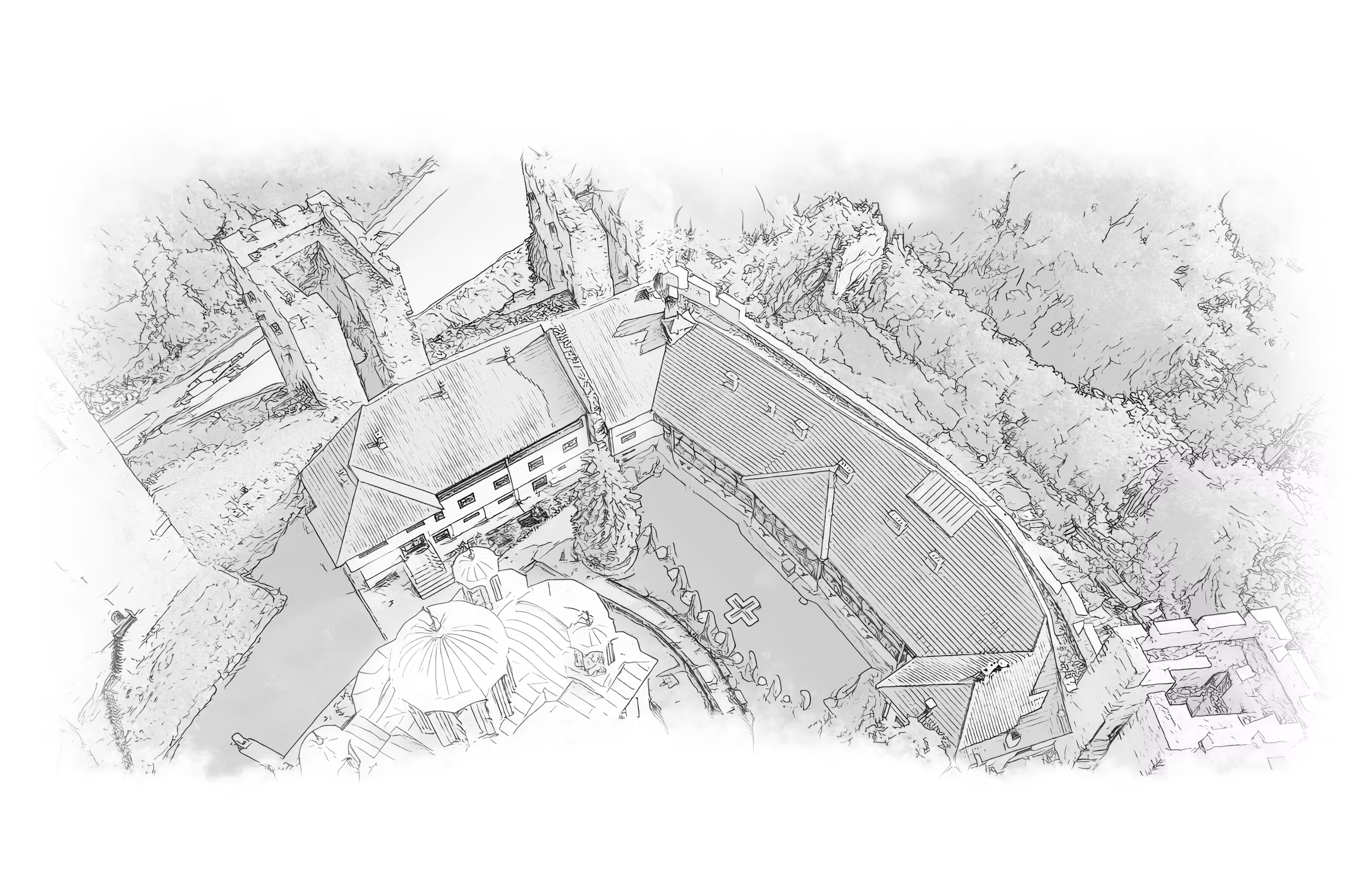
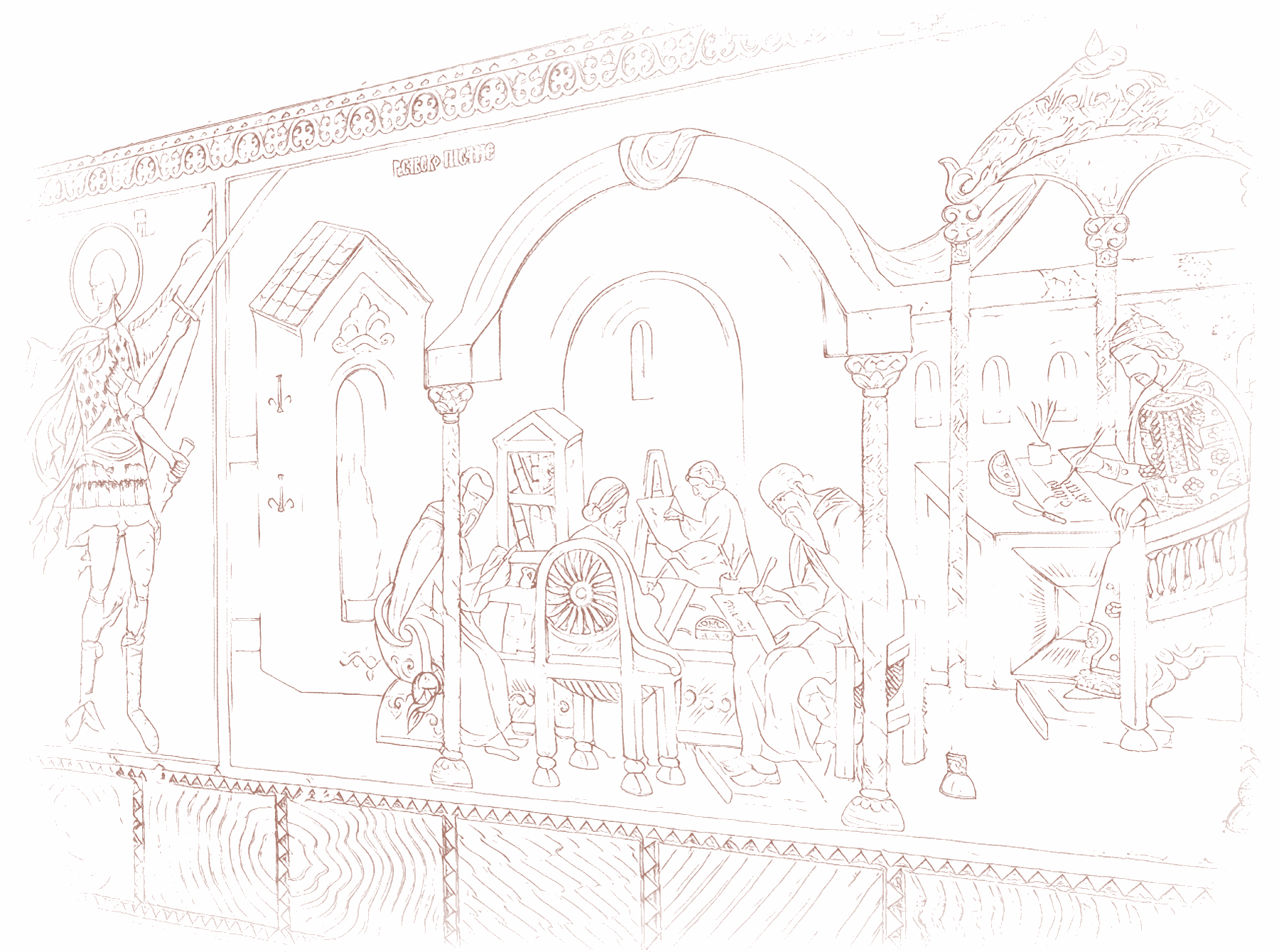
Learned monks gather scrolls
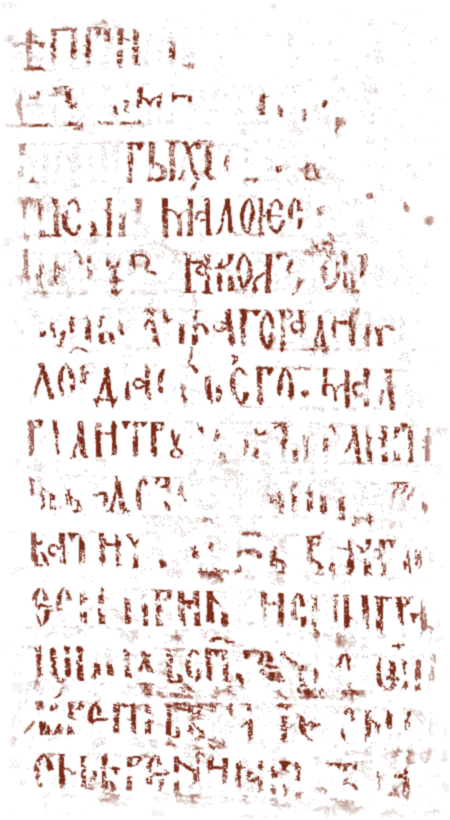
The age of Despot Stefan
The Despot's Treasury
At the end of the 14th and the beginning of the 15th century, the Morava region became the pivot of Serbian culture, and Manasija a gathering place for the finest minds of the age, in which the Resava School flourished. Learned monks collected Greek scrolls from Mount Athos and Byzantium, Latin and Hungarian books, and manuscripts from the Serbian lands.
The inventory of that library is not known. It is believed to have been above all a treasury of liturgical and spiritual books, in no way inferior to the libraries of the great monasteries of its time, such as Hilandar - all the more so since Manasija had a scriptorium, where monks copied and preserved manuscripts.
THE RESAVA SCHOOLWhere the Resava manuscripts are today
- Mount Athos
- the largest number of surviving Resava manuscripts
- Russia
- a number of them ended up there and remained
- Peć and Belgrade
- the Patriarchate of Peć and the Patriarchate in Belgrade
- Fruška Gora
- books the monks took with them in the 18th-century migrations
A few fragments of that former treasure are now kept in treasuries, museums and libraries from Mount Athos and Moscow to London.
Fires, plunder and migrations
The Fate of the Library
In the 15th century the conquerors brought devastation, burning many manuscripts along with the monastery. Just as the monastery was plundered, burned and seized, so the original library was destroyed, looted and scattered. During a brief revival in the 18th century the books returned with the monks, but in the migrations they fled once more - some are still kept today in the monasteries of Fruška Gora.
After the Second World War the new authorities confiscated some of the books and archival material. No records were made, the books were never returned, and their fate is unknown - the monastery hopes that one day they will come back where they belong.
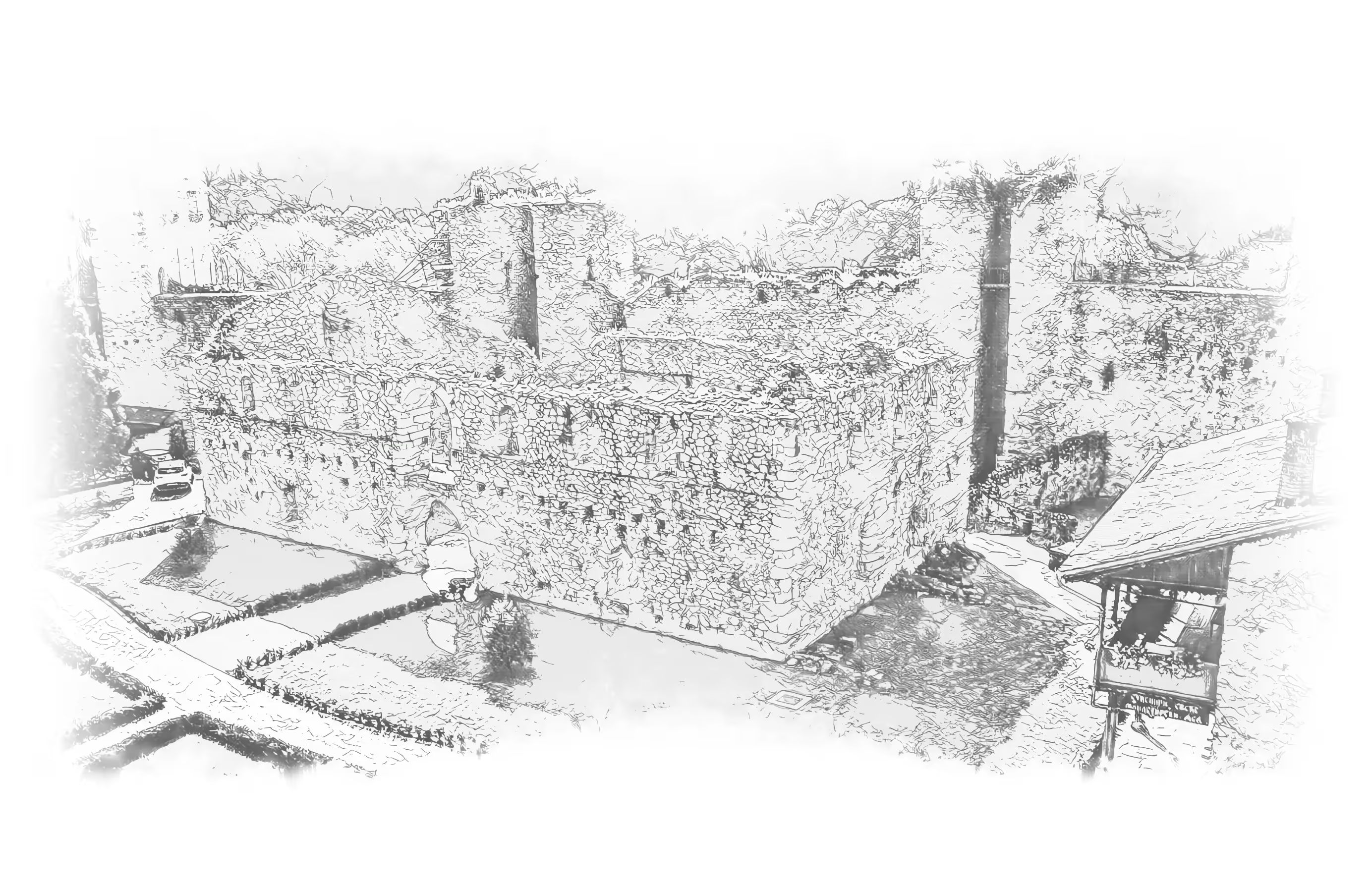
Two rooms on the upper floor of the guesthouse
Since the early 19th century
The Library Today
Books have been placed in the present library since the beginning of the 19th century; the first inventory of the collection, mentioned by Josif Veselić, was compiled in the middle of that century. The larger, sunlit room holds glass-fronted cases and a reading room with work tables. The smaller room keeps the most precious items: old liturgical books, Gospels, Lives of saints, menaia and the chronicles of the monastery - it is at once a library, a museum and an archive.
- ≈ 7,500
- library items
- 5
- manuscript books
- 120+
- early printed books
- 1802–1887
- archival holdings
According to the catalog “Manuscripts and Early Printed Books in the Pomoravlje District” (2020), the Manasija library is the most important and the richest in the district; its early books are cultural property of exceptional importance.
Serbian Church Slavonic, in Resava orthography
Five Manuscripts
15th c.
Service Menaion for September
112 of 120 leaves, Serbian Church Slavonic, Resava orthography; brown ink, headpieces and initials in cinnabar. Inscriptions in it show that it was once at Mileševa and Bođani.
16th c.
Service Menaion for September
A fragment, also in Resava orthography, in brown ink.
1736
Miracles of the Most Holy Theotokos
Copied by Jevrem, a hierodeacon of Manasija, at Resava during the brief period of liberation; 178 leaves, in black and red ink.
1780
Against the Antichrist
Copied by Arsenije Georgijević of Šanac Sige (today's Perlez), in cursive script on 197 leaves.
1810
A Short History of the Church
A work by the priest Petar Vulić, parish priest of Mošorin - 111 leaves, Russian Church Slavonic, in cursive.
From Mrkšina Crkva to Moscow

Early printed books
The Printed Word
The oldest Serbian printed book in the library is the Four Gospels of the hieromonk Mardarije of Mrkšina Crkva, printed in 1562. Alongside it are 18th-century liturgical books from Kyiv, Moscow and Venice - among them the Srbljak printed in Venice in 1765.
Here too are first editions of 19th-century writers: Dositej Obradović, Vuk Karadžić, Lukijan Mušicki, Milan Vidaković, Dimitrije Avramović and others - the testimony of an entire era of Serbian culture.
EARLY BOOKSIn a case of its own
The Russian Empress's Gospel
An altar Gospel printed in Moscow in 1851, bound in silver with decorative appliqués and an engraved inscription. It was given to the monastery in 1857 by the Russian Empress Maria Alexandrovna, and brought by the Russian diplomat Fonton.
Archival records
A Silent Witness of Time
Among the monasteries of central Serbia, Manasija stands out for its extensive archive from 1802-1887: correspondence with church and state authorities, annual reports of the superiors, documents on estates and restorations, and even plans of the monastery buildings and of watermills on the Resava River. It also holds the papers of Bishop Hrizostom of Braničevo - five boxes of correspondence from 1952-1989.
The material still awaits full study. Until then, in the peace of Manasija's walls, scholars, researchers and pilgrims find books that have borne witness for centuries to the endurance of faith as the foundation of Serbian culture.
THE MANASIJA ARCHIVE