

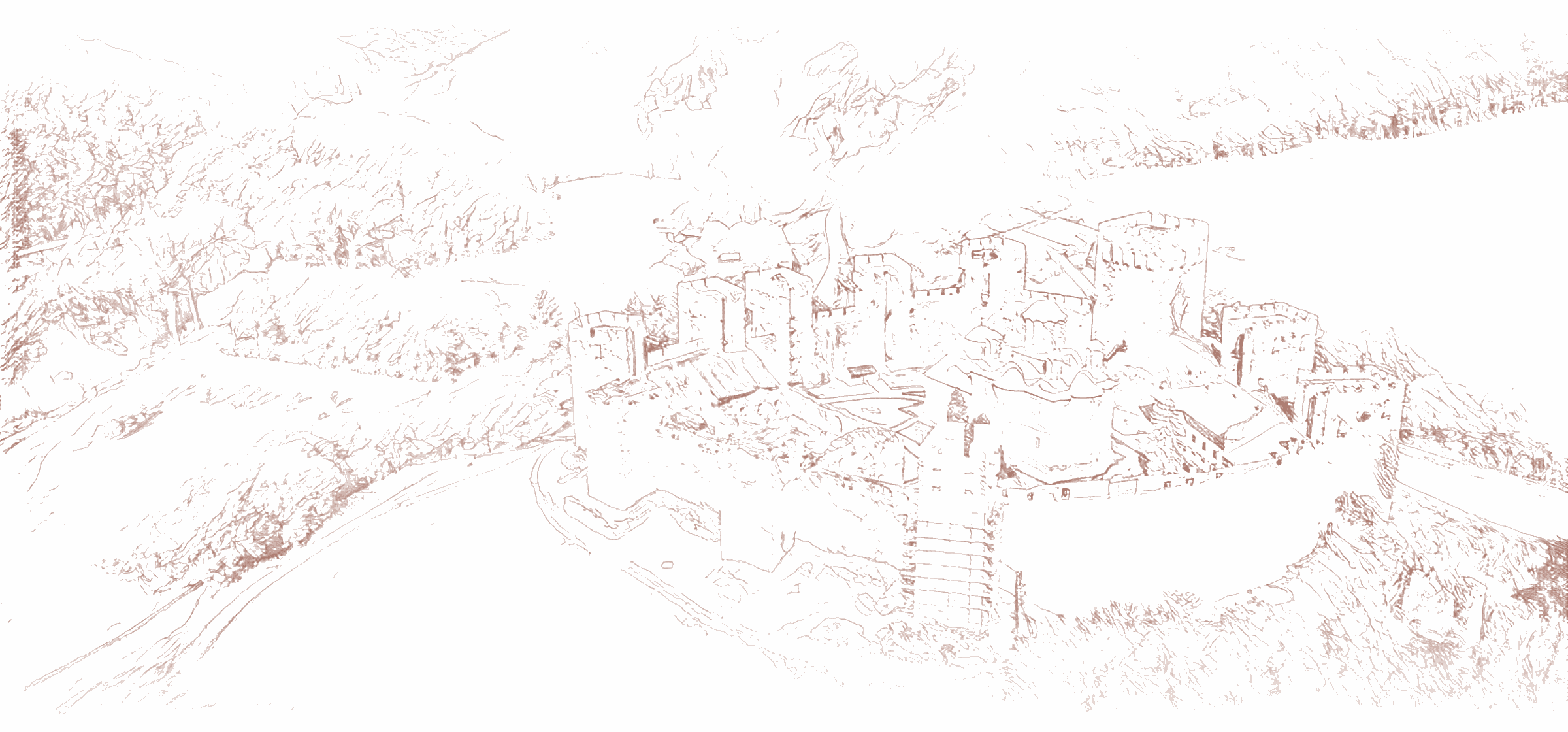

The anonymous authors of the Nikoljac and Branković Chronicles record that around 1476 the Turkish sultan Mehmed II the Conqueror (1432–1481) carried off the great monastery bells from Resava to Constantinople [NLA 368: 33–34; NLN 169: 71г; SLDĐ 23; SSRL 1220–1221; BL 56–57]. According to the data of the Ottoman census of the Sanjak of Smederevo carried out in 1476/1477, the imam Mahmud Fakih was still in the fortress of Resava, which was then commanded by the dizdar Muslihudin, and although the Resava monk Nikon was also registered, the Turkish defter records that the monastery had been turned into a fortress storehouse and that no one held it; it is further recorded that the local people from the surroundings who had served in the monastery located in the fortress of Resava no longer served. The monk Nikon, as this census states, enjoyed the revenues of one village, but not of the monastery.11 We may assume that during the first three decades of Ottoman rule the monastery of Resava was extinguished. According to the surviving sources, the function of the monastery complex was certainly repurposed very soon after the establishment of Ottoman rule, and under the new circumstances it was settled by mustahfizes - soldiers, with their commander at their head. In this way, the fortified walls that Despot Stefan had raised to protect the monastery became the cause of the monastery's suffering under the Ottomans - who turned the Resava fortress into a strategic military installation. The last trace of the Resava monks of the 15th century is found in a note in a manuscript from the monastery of Bođani, in which Nikanor, a monk tonsured at the monastery of Resava, is mentioned as the first abbot of the monastery of Bođani, founded in 1478 [SSZN 2362]. The same note also mentions other monks of the first Bođani community: besides the hieromonk Nikanor, the hieromonks Nikodim, Filotej, Gerasim and Teofilakt, the deacon German, and the monks Elevterije and Aksentije, but it is not stated explicitly that they were tonsured at the Resava monastery.12 Nevertheless, various authors assume that these monks too came from the monastery of Resava, which is not impossible. If the entire first brotherhood of Bođani was made up of Resava monks, this could mean that in 1478 the Resava community, or at least part of it, found its new home in Bođani. Some authors suppose that Manasija suffered and was set on fire during the Hungarian military campaigns against the Ottomans at the end of the 15th century, led along the valley of the Velika Morava by Pál Kinizsi, that is, Pavle Strijemljanin (1432–1494); it is possible that this really happened, but such claims would need to be supported by source testimonies, which for the time being we do not have.
- Cf. Krstić, "The Bells of Resava and the Monks' Betrayal - On a Report from the Nikoljac and Branković Chronicles," 193–194.
- See also N. N., "I. Serbian Monasteries" („I. Сербскiи монастыри"), Serbian Chronicles (Сербске лѣтописи), year III, part 9 (1827): 1–11: 6.