

Despot Stefan Lazarević
The Life of the Holy and Right-Believing Stefan the Tall, Despot of Serbia
Page 24 of 44
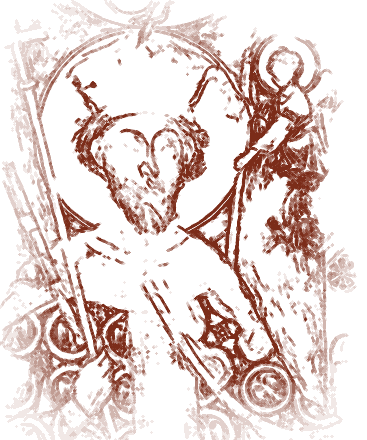
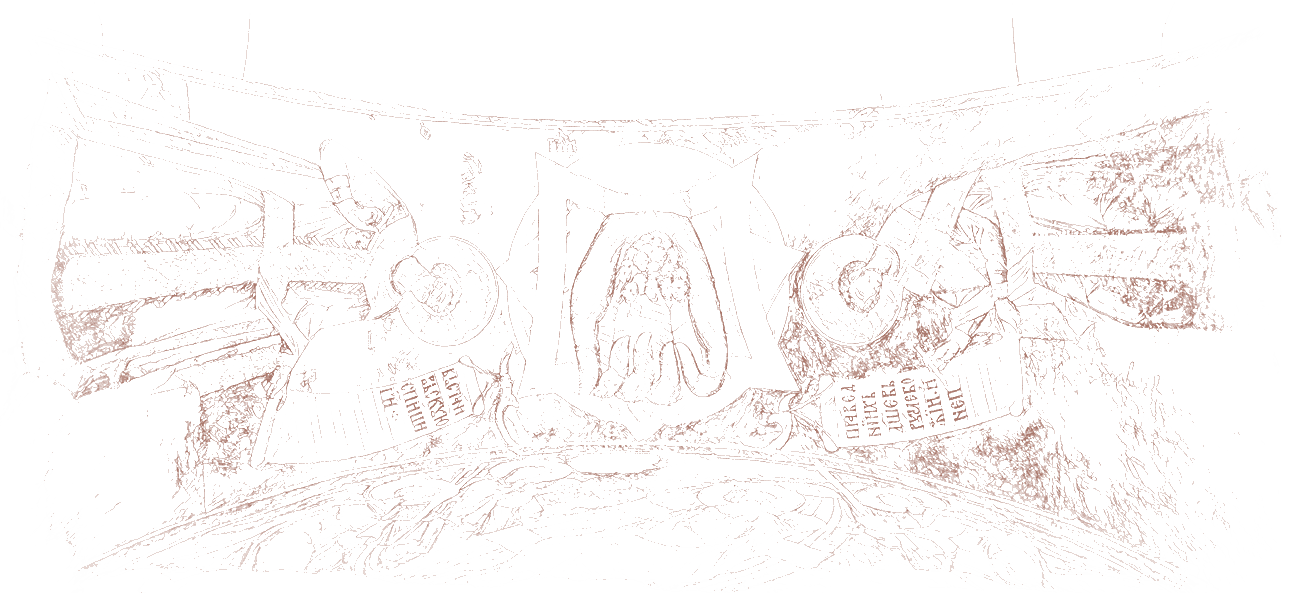
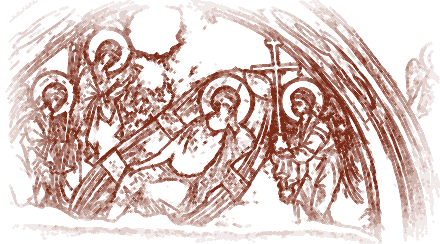
them. For when the love of this divine longing takes hold of a man, it swiftly seizes him, lifts him, and raises him on high. He therefore rejoiced over these desert-dwellers and received them sweetly, and sought always to have them with him. And knowing that hesychia (prayerful silence) is ordained to lead every man to the great honor of vision and contemplation, he went about the mountains and fields and wildernesses, seeking where he might raise the longed-for community, a dwelling for prayerful silence and stillness. And having found the most fitting and best place, where the house (that is, the church) was to be, he first prayed to God and then set to the work, and laid the foundation in the name of the Holy Trinity, the all-sustaining Godhead. And so everywhere, with every care and with the most beautiful and costly things, with the most skilled workmen and the most experienced painters, wherever they were to be found, and with much gold and many colors, he adorned it. For he sent (to summon masters) even to the islands and everywhere. And thus, with great and immeasurable expense, the house (the church) was completed and adorned, together with the city around it and the extraordinary dwellings for the common life. And he gathered from everywhere chosen monks worthy of admiration and settled them there. And he gave and bestowed villages and vineyards, and moreover in all his regions, under his signature, he gave. And day by day he laid up treasures here. He also made himself a tomb there, in which he was laid a little later. He gave also icons of great price, adorned with pearls and gold, and furnished it with every book for the services, and gave liturgical vestments and church vessels in abundance, adorned with great pearls and gold, so many that it surpassed even the chosen great lavras of Mount Athos; and these too he had adorned with every lamp, shining with many-lighted gold. And let me mention first this, which he offered and adorned here! With great honor he caused the rite of the God-chosen Supper of the Lord (that is, the Holy Liturgy) to be celebrated here, likening himself to a seraph. Then he summoned the patriarch, who was then Kirilo, with the whole council of Serbian hierarchs, abbots, and all the other honorable men, and also all the nobles, to the consecration of the church on the day of Holy Pentecost, when the Holy Spirit descended in tongues of fire upon the holy disciples of the Word and God. And a multitude of the poor came as well, to receive alms, which he always gave them without stint. And then one could see the joyful feast of those who celebrated, so that one could say that word of Solomon when he renewed the house: And the peoples rejoiced, not only having eaten many beasts as there (3 Kings 8:63–66), but having been granted many gifts. He began, then, to build this community in the year 1407, and before this year the pious lady Evgenija, mother of this same-named Stefan, reposed. For she received such a name in the monastic habit. And she was laid in her own monastery, called Ljubostinja, of the Dormition of the Most Pure Mother of God. These two edifices, however: the reigning city (Belgrade), which we mentioned a little before, and the church in Resava, the pious Despot never ceased, in all the days of his life, to strengthen further with every and the finest addition and oversight. Therefore all this was not raised in a short time, during and alongside the wars, but was built over many years.” The monastery of Resava, which was named Manasija after the Despot, because for his wondrous and wise eloquence he was compared to the Old Testament Manasseh (“a second Manasseh among the sweet-spoken”),24 was begun in the year 1406, and was finished and fully painted in 1418. The holy Despot dedicated the church to the Holy Trinity, and therefore
- An inscription of 1416 in the Books of Kings.