
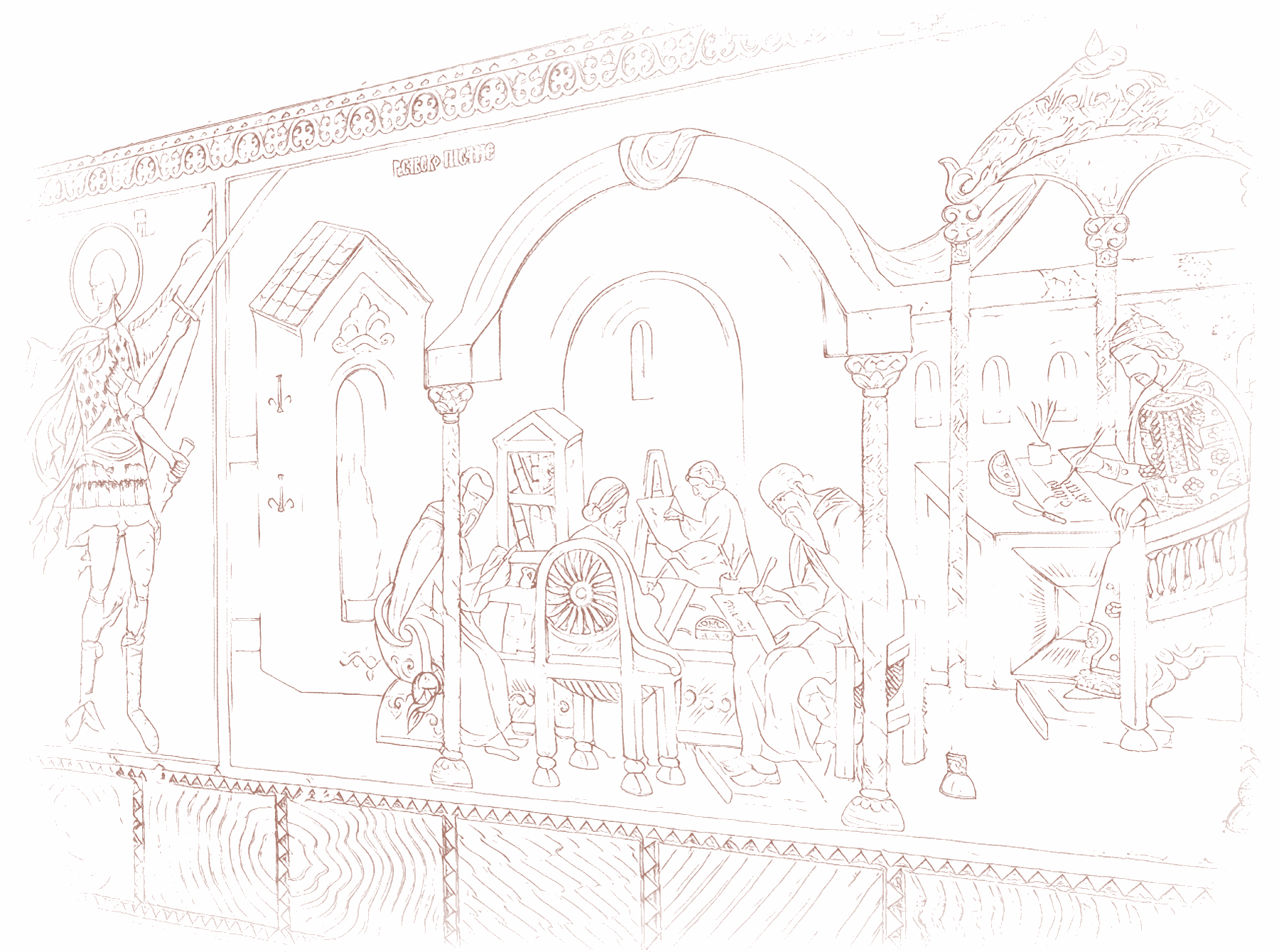


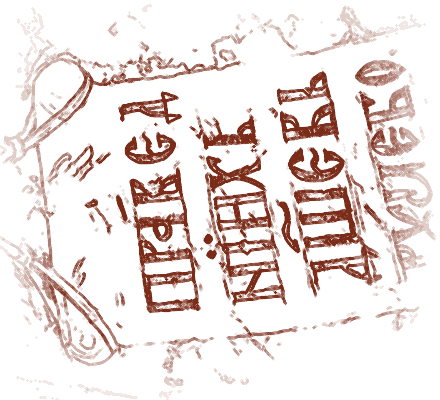
The Resava orthography did not arise by chance; the Resava orthographic reform, begun as early as the end of the 14th century with the aim of restoring the Old Church Slavonic, Cyrillo-Methodian norm of literacy, gained momentum and strength and bore good fruit thanks in great measure to the careful vision and unceasing care of Despot Stefan Lazarević. His desire for education and spiritual progress was immeasurable - the Despot invested unceasingly in education and culture, gathering the wisest minds of that age, not only from Serbia but also from neighboring lands. In the monastery chambers they diligently translated works from Greek that had not yet been translated, corrected older translations and manuscript texts in general, and copied them with particular care. In these troubled times Despot Stefan gave refuge to numerous spiritual men and refugees from the ravaged and subjugated Romaean lands and from the war-torn regions of the surrounding eastern areas, such as Gregory Tsamblak, Constantine the Philosopher and Andonije Rafail Epaktit, whereby the Serbian Despotate became a refuge of spirituality and culture. East of the Great Morava, a colony of hesychast monks settled in the monasteries of Braničevo, known as the Sinaites, remained a living center of Orthodox monasticism, being inhabited not only by Serbian but also by Bulgarian and Greek black-robed monastics. Through collaboration with these learned monks, by the labor of the Monk of Dalša, the monk Dositej, Gregory of Hilandar and other learned monks who at the invitation of Despot Stefan came to the Serbian lands and were engaged in literary work, biblical books, the writings of the Holy Fathers and the works of Eastern Christian writers were copied and translated. The nature of copying work is such that in the course of the copying itself errors arise, which could concern the abridgment and alteration of the text itself, or the obscuring and loss of its original meaning. Scribes and readers noticed the problems thus arising in the text. For example, Despot Stefan himself was dissatisfied with the existing translation of the Chronicle of Zonaras, and saw to it that the translation of this work was corrected. The priest Panaret copied a book "from the Serbian exemplar" in 1424, leaving remarks that when he compared the text with the Greek original he noticed certain deficiencies [SSZN 238]. As errors in the texts multiplied over time, the time became ripe for a language reform to be carried out, for the texts to be codified and the methods of work standardized. Thus was born an orthography that strove to return literacy to its original form, inspired by the best models of the Serbian Zeta-Hum, Bulgarian and Greek traditions. Its supranational character was more than a cultural revolution - it was a foreshadowing of the humanism and the Renaissance that would only later illumine the European lands. In the wake of this revolution, Despot Stefan, after 1423, asked his close collaborator, Constantine the Philosopher, to compose an orthographic and grammatical treatise known to us by the title the Treatise on Letters (also known as the Account of the Letters or the Discourse on Letters). This work, written in Belgrade, and according to some researchers in Resava, significant also because it is the first philological treatise in Serbian literature, was not an ordinary grammar; it was the first great attempt to
Manasija Monastery · Imperial Lavra of the Holy Trinity

Manasija
loading the page