
Despot Stefan Lazarević
Charters of Despot Stefan to the Great Lavra Monastery
Page 5 of 11
Although Despot Stefan granted the monasteries significant privileges, certain obligations were retained. For example, monastic villages had to take part in military campaigns and in the building of fortifications, if that obligation applied to the Lavra's metochia. Despot Stefan was also aware of the possibility of losing the territories he had donated, and so in the
charter he provided for what would happen in the event of his death or exile. Through these documents one can see how Stefan Lazarević combined personal piety, tradition and political pragmatism in his support of the monasteries.
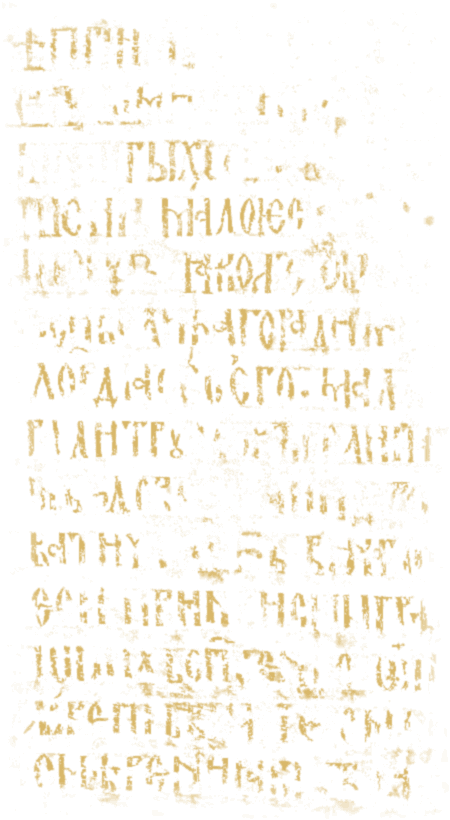
The Charter of Despot Stefan to the Great Lavra Monastery from 1407
Radiant, then, is the worldly assembling and uniting of this divine sanctuary [temple], which the Lord founded and not man. Moses, great among the prophets - foreshadowing that, although it would by no means be built in its composition like that ancient sanctuary of the Law which is the pattern for the present one - proclaims to the whole assembly of the children of Israel that God made it [the sanctuary] after the likeness shown on Mount Sinai, God who said to him, to Moses, as He established the law: See that thou make all things after the pattern shewed to thee on Mount Sinai [Ex. 25, 40; 26, 30], and that all be offered of gold, and of silver, and of precious stones [Ex. 26–27], and of the most honorable things, down to the last and least of needs [Ex. 25, 2–7]. The All-good Master and Righteous Judge by no means rejected the gifts offered in faith, neither the widow's two mites, nor yet the cup of cold water given in the name of a disciple, and He gave a reward to the one who was deprived of it. Therefore all brought offerings: this one this, and that one that, each according to his desire and his means. And thus was that ancient sanctuary made.
This commandment of God and the ministry of Moses - I mean that work, the sanctuary - when the most pious and most Christ-loving emperors saw that it was most divine and somehow the highest in loftiness, manifestly also most divine in radiance and honor, they, having considered our evangelical [sanctuary], which is like [in the likeness of] the heavenly sanctuary [tabernacle], were moved to emulate it. And they brought this and that, and what was brought is worthy both of praise and of reward. But from their very foundations they raised up radiant and lofty and, so to speak, heaven-gazing temples to God and to what is God's, adorning them on high, and they raised up heartfelt zeal and warmth and faith of the soul above all gold and precious stones. With every donation, gift and fruit they not only secured them against infirmity and want and satisfied every need, but also by their imperial charters with golden seals they confirmed and commanded that from generation to generation [those donations] should remain steadfast and unchanged. For this we too shall be remembered in the charter from generation to generation, to the praise of the Lord, and shall dwell together in their remembrance, now and hereafter, firmly believing that we shall enter into the joy of our Lord [Mt. 25, 21] and be with the Master forever, according to the true promise, as His true servants