Despot Stefan Lazarević
Charters of Despot Stefan to the Great Lavra Monastery
Page 3 of 11
Seeing this divine rule and the obedience of Moses, the God-loving emperors recognized that the New Testament, evangelical Church is likewise like this heavenly temple that God revealed to Moses. Moved by love of God, they did not wish merely to give donations, although that is praiseworthy and worthy of reward, but they laid the foundations of the churches of God, raised them on high and adorned them with zeal, faith and spiritual love, which is more precious "than all gold and precious stones." The emperors gave the monasteries revenues and donations and offered up fruits in order to relieve infirmity, help the poor and meet every need. Moreover, they made certain that these goods would remain after them as well, issuing charters and chrysobulls by which they established that their gifts should remain firm and unalterable through the generations. They believed that in this way they would commend themselves to the Lord, remain in the remembrance of God and the remembrance of their people, gain eternal blessedness and enter into the joy of their Lord as good and faithful servants. Some raised the temples of God from their very foundations, while others filled them with goods and secured their permanence. Their successors, continuing their piety and love for Christ, knew that they would receive a reward from the Lord of all, who measures the worth of an offering not by its quantity but by the faith and sincerity of the heart. Following the example of the pious emperors, the right-believing Despot Stefan, too, as ruler of the Serbian land, feels the obligation not to be excluded from such beneficence. In the eighteenth year of his reign he received the abbot of the Great Lavra, the hieromonk Genadije, who came begging for help. The Despot, in keeping with his means and his station, decided to help the Lavra: he prayed to the Most Holy Theotokos, in whom he places his hope, and committed himself to the protection of Saint Athanasius the Athonite, as well as to the prayers of the monks of the Lavra. His desire was that the state should endure, that his benefactions to the monastery should be multiplied, and that he should gain the eternal Kingdom. As part of his assistance, Despot Stefan granted the monastery four villages. In return, as the abbot Genadije, the hieromonks Simon and Grigorije, and the other monks and elders of the Great Lavra agreed and promised, the monastery would every year commemorate Despot Stefan in its great church as founder (ktitor), according to the customs of the Church and the imperial tradition, just as Emperor Stefan Dušan is commemorated. The Despot confirmed that this charter must remain firm and inviolable until the end of his life, and at the same time he called on his successors to respect and uphold it.
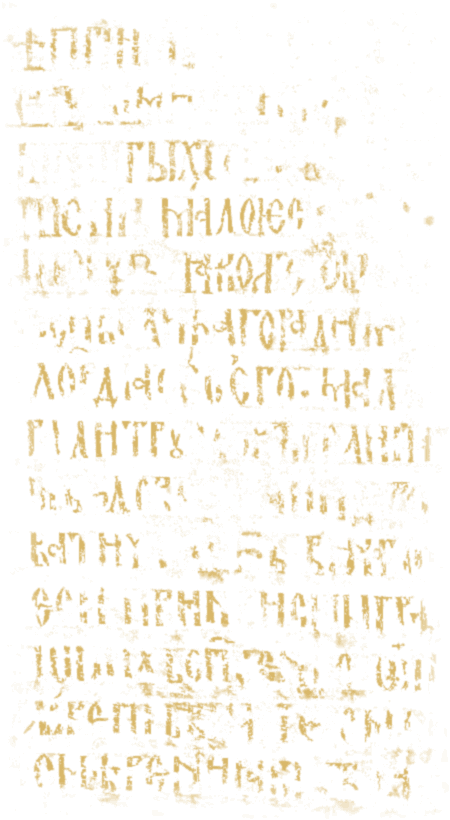
Two copies of this charter have been preserved in the archive of the Great Lavra Monastery - the original and a copy made very soon afterward, written by the same hand - it was produced by the same scribe. The charter has attracted the attention of researchers since the beginning of the 20th century. The text and photographs of this charter were published by Stojan Novaković (1842–1915), Dragutin Anastasijević (1877– 1950), Sima Ćirković (1929–2009) and Aleksandar Mladenović (1930–2010).
The authenticity of this charter has been the subject of scholarly debate. Some historians, such as Konstantin Jireček (Konstantin Josef Jireček, 1854–1918), doubted its genuineness, particularly because of the use of the expression "my empire" ("tsarstvo mi"), which was not customary for the title of despot. This doubt was also accepted by other historians, such as Stanoje Stanojević (1874–1937).