
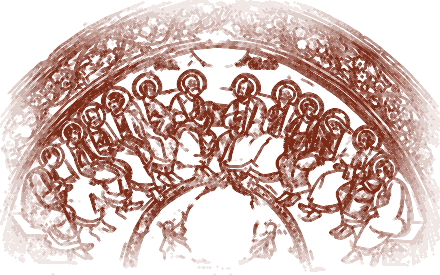
the mighty groaning of an invisible trumpet that lasted for hours. In the church, the icons of the Most Holy Theotokos, of Saint John the Baptist and of the twelve apostles rose into the air around the icon of the Lord, thus depicting the Second Coming of Christ. Thus the Despot's death, followed amid uncertainty and insecurity by a hastily organized burial, is not merely a tragic end, but also a foreshadowing of a new light.
In the final praise, Despot Stefan is compared with the great figures of the Old Testament: with David in meekness, with Solomon in wisdom, with Abraham who as a good host received strangers; in beauty he is a second Joseph, who distributed gold instead of wheat; in generosity he is a second Job. These are some of the many images with which the hagiographer illuminated the Despot's figure.
In several places in the Life Constantine the Philosopher mentions books, persistently emphasizing that they were very important to the Despot - which agrees with the statements about the Despot's love of books left in brief notes by some of the copyists and translators of the Resava School. According to Constantine, the Despot's imperatives were progress and growth in the knowledge of God and the love of God, joined with active Christian love - mercy: "His work was the unceasing giving of alms and the frequent reading of the divine words /i.e. the holy, divine books/. And he cared so much for the poor that he himself, by night, would go out onto the roads and (into) the enclosed fields to give alms with his own hand" [ŽDS 76].
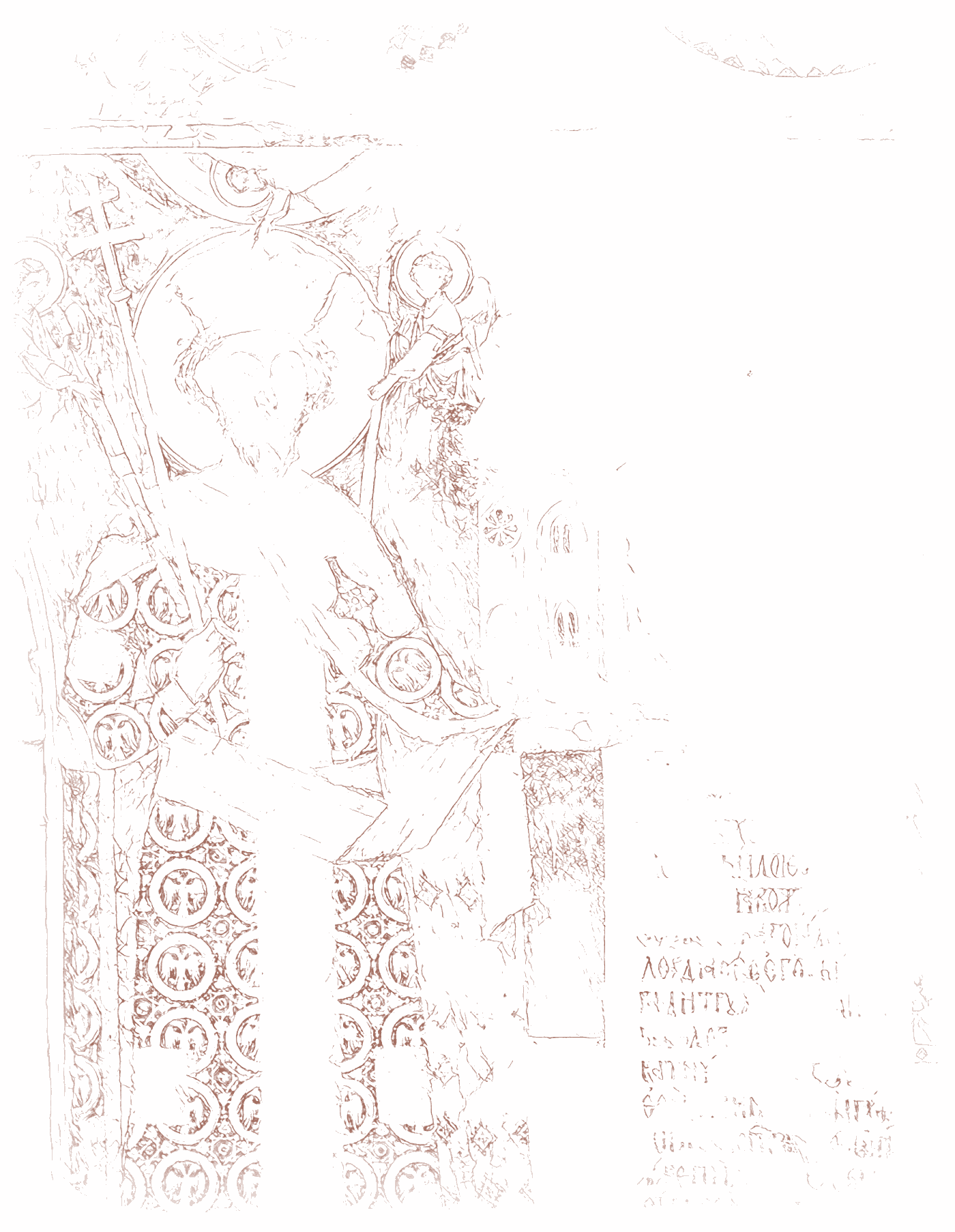
As Marija Vasiljević has observed, the building of the Despot's burial endowment - the Manasija Church of the Holy Trinity - lies at the very center of the envisaged prologue Life, but also at the center of the entire text [ŽDS 52]. The hagiographer devotes special attention to the Resava monastery. He emphasizes how Despot Stefan thought of the spiritual needs of the hesychast monks, and so raised a city that, unlike Belgrade, has a path leading "toward the heavenly Jerusalem": the Resava monastery. Constantine the Philosopher repeatedly underlines how much labor and love the Despot invested in raising this monastic city. He reminds his readers that Despot Stefan, out of love for the hermits, valuing stillness and monastic spirituality, went about the mountains in search of a place suitable for raising a house of silence. Moved by his care for the hermits, he chose the place, laid the foundation in the name of the Holy Trinity, raised the magnificent church of Manasija, supplied it and furnished it in the best possible way, with precious icons set with pearls and gold, with vestments and vessels, with books and with everything needful, and at great expense adorned it and gilded it completely. And he bequeathed to the monastery vineyards and estates, that it might lack nothing, adding precious objects to the monastery treasury every day.
The Despot personally commanded that the Holy Liturgy be served in the monastery with great honor, notes Constantine the Philosopher. Much was invested in Manasija Monastery, and that is why the raising of the monastery took a long time, the Life says. It was built over many years - that it might endure for many years. When the monastery had been built, the Despot invited the Patriarch and