
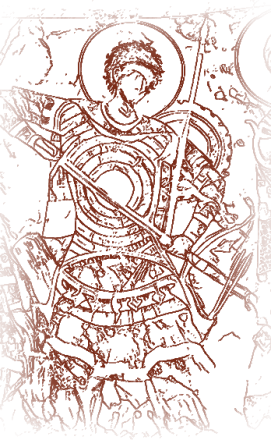
Despot Stefan Lazarević
The Inscription on the Marble Pillar at Kosovo
Page 2 of 7


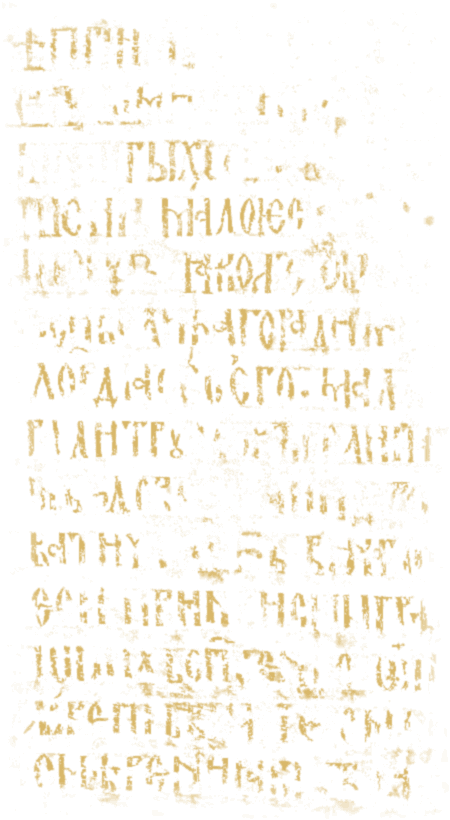
The first to draw attention to this inscription was Pavel J. Šafárik (Pavel Jozef Šafárik, 1795–1861) - he found the text in a manuscript book in the library of the Metropolitanate of Karlovci. The text was published by Alexander Fyodorovich Hilferding (Александр Фёдорович Гильфердинг, 1831–1872), and later by Panta Srećković (1834–1903), and after him by Ljubomir Stojanović (1860–1930) in his collection of old records and inscriptions [SSZN 4946]. Researchers consider the inscription very significant. The historian Ilarion Ruvarac used it as one of the sources for establishing the exact date of the Battle of Kosovo, and the text remained the subject of scholarly analyses over the following centuries. The marble pillar at Kosovo was conceived so as to address the passing traveler directly with its carved words. The inscription begins: “O man who treads the Serbian land, whether you be a newcomer or a native, whoever and whatever you may be...” Although the Kosovo marble pillar was torn down and no longer exists, the content of the original inscription has been preserved thanks to the copy. To mark six centuries since the Battle of Kosovo, in 1989 a monolithic pillar of white marble was erected near the Monument to the Kosovo Heroes at Gazimestan, and the original words of the old inscription were written on it, both in Serbian Church Slavonic and in translation into modern Serbian. This inscription has been translated into modern Serbian many times; its translators include Đorđe Đ. Stratimirović (1858–1936), Đorđe Sp. Radojičić (1905–1970), Lazar Mirković (1885–1968), Svetozar Tomić, Đorđe Trifunović, Tomislav Jovanović, ... The inscription extols the courage and exalted spirituality of Prince Lazar, who symbolizes the highest ideal of a man devoted to faith in God and to the defense of his neighbors. His warriors are depicted as shining stars in the sky, while their appearance is compared to the spring earth strewn with many-colored flowers - they are clad in sumptuous gold and adorned with precious stones. The image is liturgical: Prince Lazar leads his army to Christ, so that they may end their lives in Him and receive the crown of martyrdom. This image of the Serbian army, which fights and suffers at Kosovo but wins the heavenly battle, would later appear again in the Serbian folk epic tradition, and it would also find its echo in modern creative works. The Inscription on the Kosovo Marble Pillar remains one of the most significant monuments of Serbian medieval literature and culture, which still bears witness today to a profound tragedy, but also to the unshakable spirit of the Serbian people.
The Inscription on the Marble Pillar at Kosovo by Despot Stefan Lazarević