


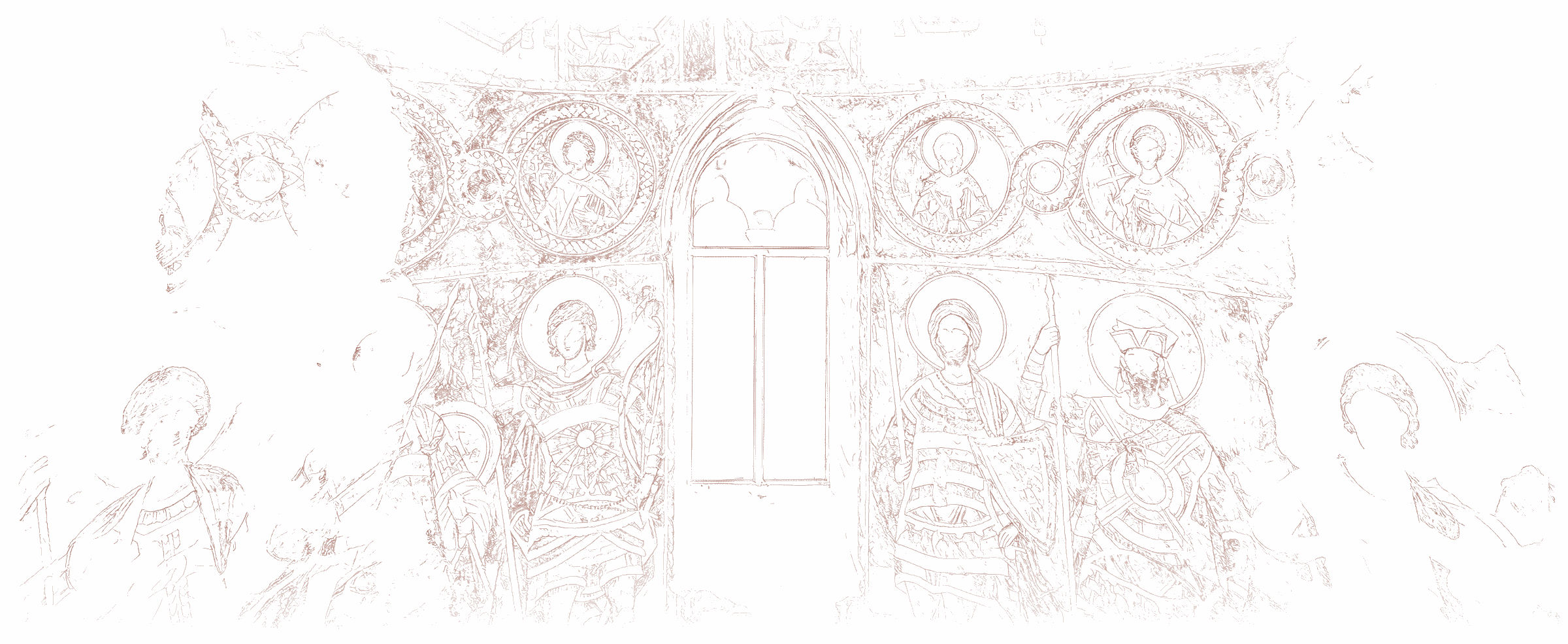

The Holy Despot was able to renew the Serbian state and to strengthen it considerably in material terms, to make it independent and practically abolish its vassal status. This pious Serbian ruler achieved much in strengthening the Serbian Church. In the time of his reign, under his patronage, there arose some of the most important Serbian medieval church centers, pearls of the Serbian Middle Ages such as the monastery of Resava, or Manasija, or the monastery of Kalenić. Serbia is still adorned today by the endowments of the Holy Despot - those of which he himself was the founder, but also those built during his reign, such as the monasteries of Vraćevšnica, Koporin, Pavlovac, Nikolje under Rudnik... Numerous monasteries and churches whose builders are uncertain are linked to the name of Despot Stefan, such as the monastery of Rudenica, Kastaljan, the Church of the Transfiguration of the Lord at Gorovič, and so on. It is difficult and a thankless task to properly assess the contribution that Stefan Lazarević made to Serbian culture and history. Thanks to Despot Stefan, the most beautiful monuments of the Morava style arose in the Serbia of that time. Under his rule several spiritual and educational centers arose in Serbia, the most important of which was the one located at Manasija Monastery.
"He (Stefan) was like Joshua the son of Nun in courage and faith..." (Constantine the Philosopher, Life of Despot Stefan)
Six centuries ago the court of the Hungarian king was a place where Christian political leaders conducted negotiations. In Buda, in the summer of 1424, the East Roman and the Serbian rulers met for the last time. As Jovanka Kalić observed a few decades ago, "in circumstances which, not only for their symbolism but also in terms of real politics, say much about