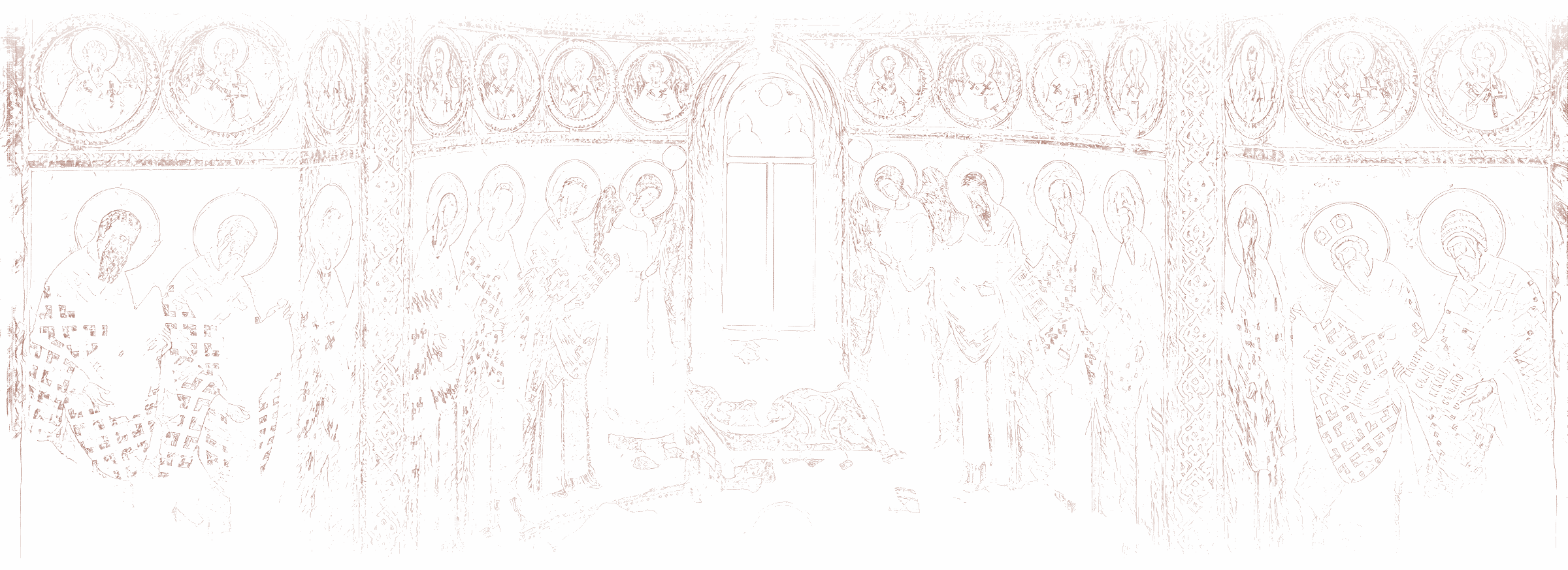

the Despot humbly entreats the Holy Trinity to accept his “small offering” and to grant him salvation. The Despot is turned toward the right side of the composition, where the Three Angels who appeared to the forefather Abraham, that is, the Holy Trinity, are painted, giving their blessing to the Despot as they receive the model of the church. This fresco presents the church of Resava as a place where the earthly and the heavenly, the human and the divine, are joined, emphasizing the role of the Despot as a servant of God, a ruler who trusts in the grace of God in hope of salvation. The founder's composition of the holy Despot is a supreme expression of art, in which details - symbols, gestures, garments, facial expressions - are rendered with exceptional care.
The Unsleeping Eye and the Hand of God with the Souls of the Righteous
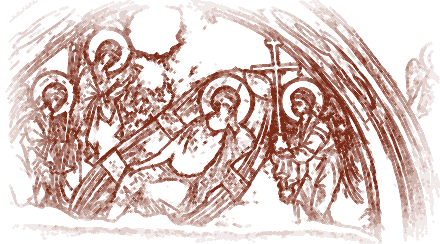
In the immediate vicinity of the magnificent portrait of Despot Stefan, above the very threshold of the entrance into the sanctuary of the nave, the scene of the Unsleeping Eye shines in the lunette above the entrance: Christ Emmanuel, young and solemn, reclines leaning on His elbow upon a mattress, while two angels at His sides carefully bring the sponge, the spear and the cross - the instruments of His future Passion and glory. His mother, the Most Holy Theotokos, stands there, filled with solicitous love and deep maternal sorrow, spreading her hands in prayer toward Christ, as though she wished to shield Him from the coming sacrifice or to offer Him comfort. Above this moving scene, in the vault that guards the main entrance, is an exalted and solemn representation of the Hand of God. This Hand, surrounded by a threefold mandorla of light, like a crown of the sun, holds firmly the souls of the righteous, testifying not only to the majestic divine power but also to the mercy and salvation that await those who walk in the way of the Lord. Below this exalted image are depicted two wise Old Testament kings, the Holy Prophet Solomon and the Holy Prophet David. The Old Testament kings and prophets hold scrolls in their hands, on which are inscribed prophetic words, keys to understanding the exalted symbolism of this painted composition. On the scroll of the Prophet David are written words from the Psalter: “Arise, why sleepest Thou, O Lord?” (Ps. 43:23) - words that point to the Resurrection of Christ; the Prophet David is turned toward the Unsleeping Eye and addresses these words to Christ Emmanuel as a prayerful summons to resurrection: these words sound like a distant echo of Christ's triumph over death. Opposite him, the Prophet Solomon, likewise turned toward Christ Emmanuel, inscribes on his scroll the words that explain this fresco: “The souls of the righteous are in the hand of God,” proclaiming the saving power of the Right Hand of the Lord, in which the righteous will find their salvation and eternal life in the Kingdom of God. The Hand of God, set above the very entrance to the sanctuary, becomes a symbol of hope, a signpost of salvation for all who step into this house of prayer, the Despot's spiritual endowment.