
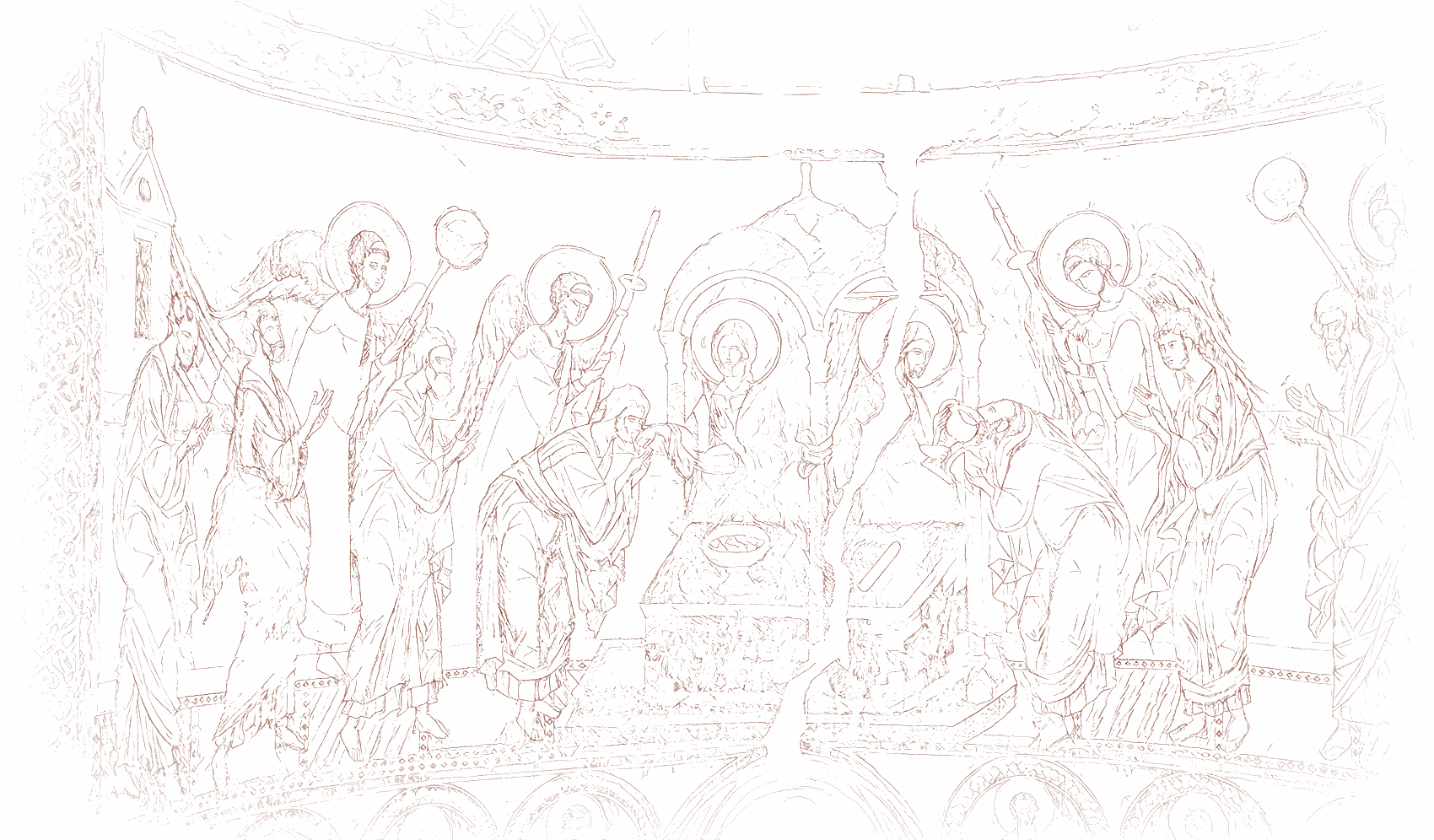
It is possible that this unusual fresco alludes to Saint Despot Stefan Lazarević as the founder of this church. On the left side of the portal is painted the figure of Saint Nicholas of Myra. Unfortunately, the other frescoes have not survived - they perished during the turbulent years of the 19th century, when this church was damaged. The fate of the "White Church" was filled with trials and renewals. In the twilight of Turkish rule it was renewed at the end of the 18th century, more precisely in 1796 - we may suppose that the church was then completely renewed, since on that occasion its interior was also painted with frescoes - while only a few years later, in 1800, a new iconostasis was installed, as attested by the founder's inscription on the royal doors. In the historical sources the Oberknez Petar is mentioned as the donor of this renewal: a renewal in years of suffering bears witness to the strength of faith and national spirit in turbulent times. In the aforementioned inscription, according to some readings, Knez Pana is also mentioned [SSZN 3708]. What is certain is that the inscription on the renewal, dated May 16, 1796, says the following about the circumstances in which this renewal was carried out: "In that time there was sorrow for the people from the Turks." Unfortunately, the Turks oppressed the people even after the renewal of this church, as its own suffering attests - in the years of the uprising, the church was severely damaged in 1813. But the church was soon renewed, as attested by the notes of Joakim Vujić (1772–1847) from 1826. According to his account, this church had once been a monastery, which the Turks destroyed; it was renewed, and at the time of Vujić's journey services were being sung in it.
Beside the Church of the Nativity of the Most Holy Theotokos at Beljajka - the Vrbovac Church - there is a necropolis, as the surviving gravestones also indicate. It has been established that people were buried beside the Vrbovac Church in the period from the 15th to the 18th century. In this way, too, the people remained by their holy place, even in the period when it lay in ruins. In the church itself, during archaeological research, the remains of 12 deceased persons were found, and they were laid to rest in a common tomb by the entrance.
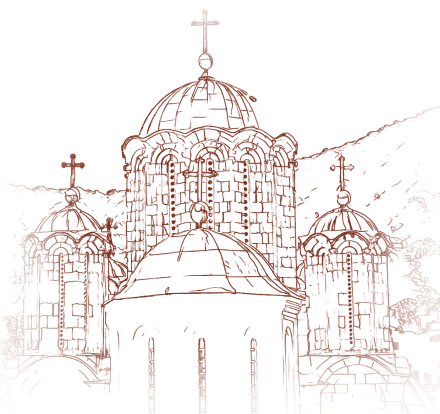
The White Church captivates attention with its simple yet harmonious architecture. It is of modest dimensions, single-naved, with a compressed inscribed cross in its ground plan. On the west side there is a small square narthex, adorned with characteristic niches in the north and south walls, while in one of them a small baptismal font is hidden.